
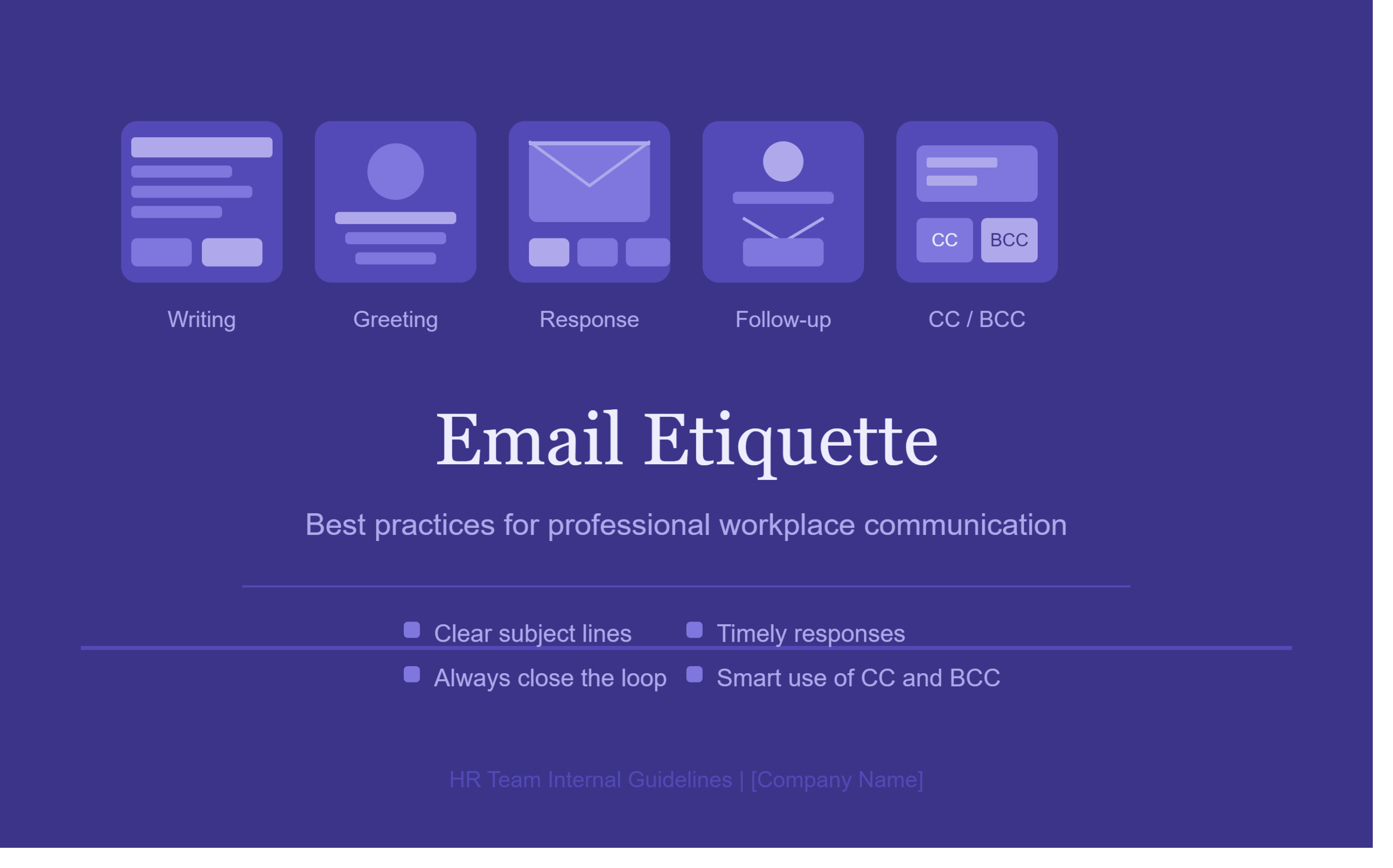
Why Email Etiquette Matters
Email is one of the most important communication tools we use every day. Good email etiquette helps us communicate clearly, respond on time, avoid misunderstandings, and maintain a professional workplace.
Whether you’re communicating with a colleague, Team Lead, manager, client, or stakeholder, the way you write and respond to emails reflects your professionalism and represents our organization.
“Email is not just a tool — it’s a reflection of your professionalism. Write every email as if your most important stakeholder will read it.”
Write Clear and Professional Emails
Good email etiquette starts with clarity. Use a meaningful subject line and keep your message concise, respectful, and easy to understand.
Clearly mention the purpose of the email, required action, deadline, or information needed. Before sending, check the content, names, dates, links, and attachments.
Respond to Emails on Time
Timely communication keeps work moving smoothly.
Emails that require a response or acknowledgement should be acknowledged within 3 hours and should not remain unanswered for more than 24 hours during working days.
If you need additional time, acknowledge the email and let the sender know when you will provide an update.
Keep the Communication Loop Open
Effective email etiquette means taking responsibility for communication from start to finish.
Receive → Acknowledge → Take Action → Provide Update → Confirm Completion
Do not leave important requests unanswered or pending without an update. Once the requested action is completed, provide a confirmation so the communication loop is closed.
Keep the Right People Informed
Send emails to the person responsible for the action or decision. Include the relevant Team Lead, manager, or stakeholder in CC when their visibility, guidance, or approval is required.
Avoid unnecessary CCs and keep communication focused on the people directly involved.
Maintain the Email Thread
For ongoing discussions, keep related communication within the same email thread whenever possible. This makes it easier to track previous conversations, decisions, and updates.
Use Reply when the response is relevant only to the sender and Reply All when everyone in the conversation needs to remain informed.
Follow Up Professionally
If you are waiting for a response or action, send a polite follow-up within a reasonable timeframe.
For urgent or unresolved matters, follow up with the appropriate Team Lead or manager to ensure the matter does not remain pending.
Take Ownership of Communication
Professional email etiquette is not about writing long emails. It is about being clear, timely, respectful, and accountable.
Every email should help move work forward and keep the right people informed.
Remember
Clear Email → Timely Response → Right People → Follow-Up → Completion
Let’s make our communication clear, timely, respectful, and impactful — every email, every time.
🔗 Helpful Resources
Learn more about work-life balance and how it can support long-term productivity.

Leave A Comment