
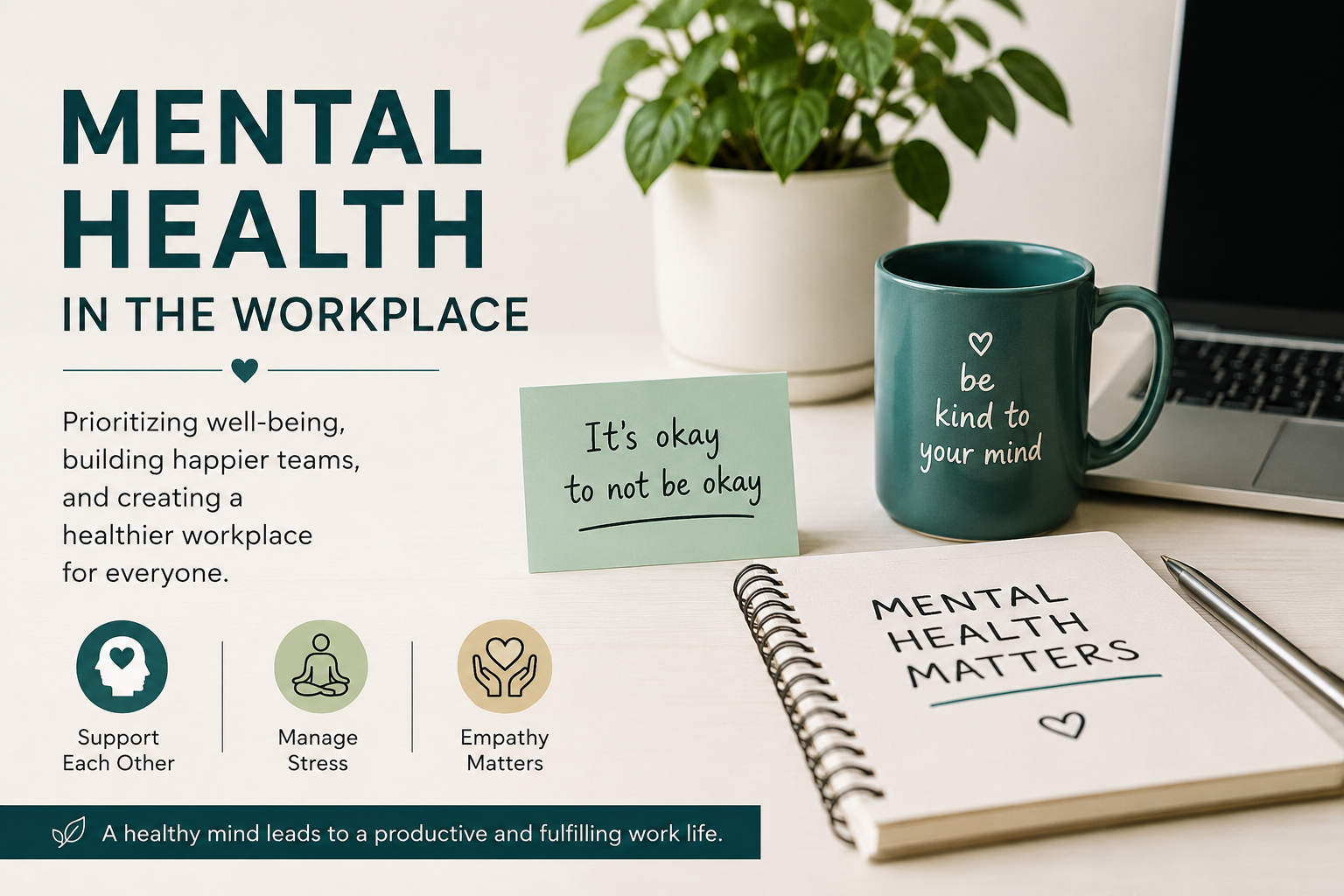
Mental Health in the Workplace: Why Employee Well-Being Matters More Than Ever
In today’s fast-paced world, balancing professional responsibilities and personal commitments can sometimes feel overwhelming. As organizations continue to prioritize productivity and performance, it’s equally important to focus on something that drives long-term success—mental health and employee well-being.
At the heart of every successful workplace are healthy, supported, and engaged employees. This week, we encourage everyone to take a moment to reflect on their mental well-being and remember that seeking support is a sign of strength, not weakness.
Why Mental Health Matters at Work
Mental health directly impacts productivity, creativity, collaboration, and overall job satisfaction. When employees feel mentally and emotionally supported, they are more likely to perform at their best, maintain healthy relationships, and contribute positively to workplace culture.
Creating an environment where people feel safe discussing mental health helps reduce stigma and promotes a culture of understanding and support.
Key Mental Health Reminders for Every Employee
1. It’s Okay to Not Be Okay
Everyone experiences difficult days. Whether you’re feeling stressed, overwhelmed, anxious, or emotionally drained, it’s important to acknowledge your feelings rather than suppress them. Recognizing when you need a break or support is an essential part of maintaining good mental health.
2. Practice Mindfulness Daily
Even a few minutes of mindfulness can make a significant difference. Simple practices such as deep breathing, meditation, or taking a quiet moment away from screens can help reduce stress and improve focus.
Quick Tip: Start with just 5 minutes of mindful breathing each day.
3. Lean on Your Team
Workplaces thrive when people support one another. A simple check-in message, a conversation over coffee, or offering a listening ear can have a meaningful impact on a colleague who may be struggling.
Small acts of kindness help build stronger teams and foster a culture of empathy.
4. Set Healthy Digital Boundaries
Constant notifications and after-hours work messages can contribute to stress and burnout. Establishing clear boundaries between work and personal time helps maintain a healthier work-life balance.
Consider:
- Turning off work notifications after hours.
- Taking regular screen breaks.
- Protecting your personal time on weekends and holidays.
5. Prioritize Quality Sleep
Sleep is essential for both physical and mental well-being. A well-rested mind is better equipped to handle challenges, make decisions, and manage stress effectively.
Aim for 7–8 hours of quality sleep each night to support your overall health and performance.
6. Seek Help When Needed
If you’re experiencing persistent stress, anxiety, burnout, or low mood, don’t hesitate to reach out for support. Talking to a trusted friend, colleague, manager, or professional counselor can make a significant difference.
Remember: Asking for help is a sign of courage and self-awareness.
Building a Mentally Healthy Workplace Together
Mental health is not a destination—it’s an ongoing journey. By supporting ourselves and one another, we can create a positive work environment where everyone has the opportunity to thrive.
As the saying goes:
“Mental health is not a destination, but a process. It’s about how you drive, not where you’re going.”
Let’s continue building a workplace culture where everyone feels safe, seen, respected, and supported.
Take care of yourselves—and each other.

Leave A Comment